Learn how GC AI uses a structured reasoning process for complex tasks.
When you give GC AI complex requests that need in-depth analysis or research, you’ll see a Thinking indicator in the message. This shows the AI is working through a structured reasoning process to ensure accuracy and thoroughness.This thinking process helps GC AI tackle tasks that go beyond simple information retrieval, such as complex legal questions, multi-document analysis, or nuanced contract review.
For complex tasks, GC AI follows a structured approach:
Scope: Define the boundaries of the question, identifying relevant jurisdictions, legal areas, applicable standards, and what specifically needs to be analyzed.
Systematic Sweep: Conduct a thorough review of all relevant information, searching through documents, identifying applicable provisions, and gathering pertinent facts.
Pattern Tracing: Identify connections, contradictions, and patterns across the gathered information, spotting how different clauses interact, where risks emerge, or how regulations apply.
Completeness Accounting: Verify that all aspects of the question have been addressed, checking for gaps, edge cases, or overlooked considerations.
Reconcile: Synthesize findings into a coherent, well-reasoned response, resolving any conflicts in the analysis and presenting clear conclusions.
The thinking process works across all AI models used by GC AI, including models from OpenAI, Anthropic, and Google. The structured reasoning approach is built into GC AI’s system, not tied to any single provider’s capabilities.


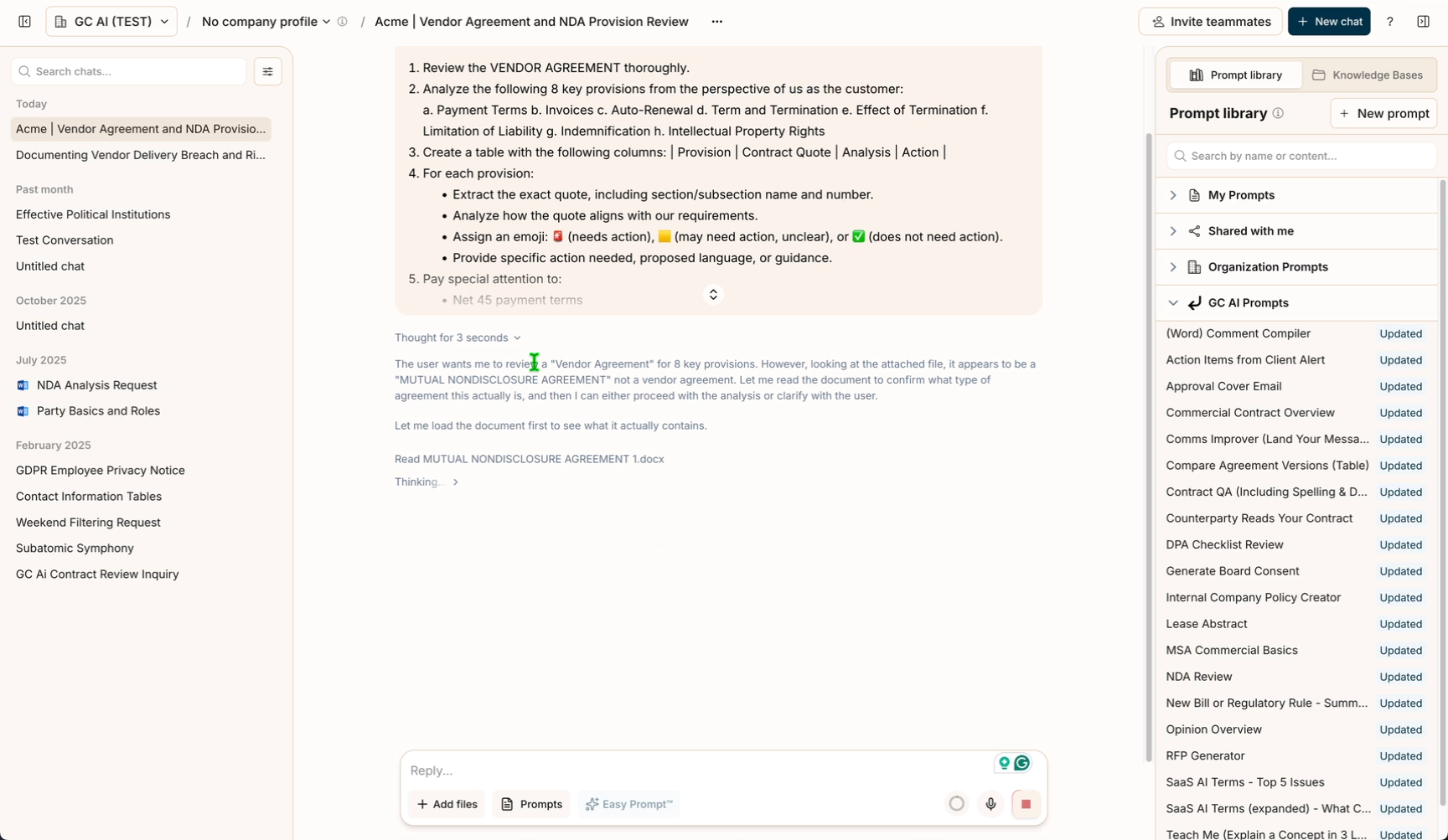 When you give GC AI complex requests that need in-depth analysis or research, you’ll see a Thinking indicator in the message. This shows the AI is working through a structured reasoning process to ensure accuracy and thoroughness.
This thinking process helps GC AI tackle tasks that go beyond simple information retrieval, such as complex legal questions, multi-document analysis, or nuanced contract review.
When you give GC AI complex requests that need in-depth analysis or research, you’ll see a Thinking indicator in the message. This shows the AI is working through a structured reasoning process to ensure accuracy and thoroughness.
This thinking process helps GC AI tackle tasks that go beyond simple information retrieval, such as complex legal questions, multi-document analysis, or nuanced contract review.